Cart
0
Quick Summary
The best way to slow tarnish is to store jewelry dry and separated, matched to its metal. Put silver in an airtight bag or box with an anti-tarnish strip, keep plated pieces in individual soft pouches, and remove jewelry before showering or swimming. Learning how to prevent jewelry from tarnishing comes down to these simple habits.
- Tarnish forms when metal reacts with oxygen, moisture, and sulfur compounds in the air.
- Sterling silver should go in an airtight bag or box, ideally with an anti-tarnish strip.
- Plated jewelry should be kept in individual soft pouches to reduce rubbing that wears the thin layer.
- Pearls, opals, and porous stones should not be sealed airtight; store them in a soft pouch in a dry room.
- Remove jewelry before showering or swimming, since chlorine and salt water speed up tarnish.
Table of Contents
- Why Jewelry Tarnishes and Which Pieces Are Most at Risk
- How to Store Jewelry to Prevent Tarnishing
- How to Protect Jewelry from Water, Lotions, and Sprays
- Does Clear Nail Polish Prevent Jewelry from Tarnishing?
- How to Clean Tarnished Jewelry Safely
- Building a Daily Jewelry Care Routine for Your Pieces
- Frequently Asked Questions
Why Jewelry Tarnishes and Which Pieces Are Most at Risk
Tarnish forms when a metal reacts with oxygen, moisture, and sulfur compounds in the air. The result is a dull, dark, or yellowish film on the surface. Sweat, humidity, and everyday chemicals speed up that reaction.
Some pieces are more exposed than others:
- Silver and silver-toned pieces tarnish fastest because silver reacts readily with sulfur.
- Plated jewelry can wear through its thin coating, exposing the base metal underneath.
- Copper and brass often darken as they react with air and skin oils.
Pieces you wear every day face more contact with sweat, lotion, and water than pieces you keep for special events. Rings are especially exposed because hands wash, touch products, and sweat often.
How to Store Jewelry to Prevent Tarnishing
Storage is the simplest way to slow tarnish, and learning how to prevent jewelry from tarnishing starts with a setup that matches what the piece is made of. A sealed bag that protects a silver chain can trap moisture against a pearl or speed up plating wear on a cheap ring.
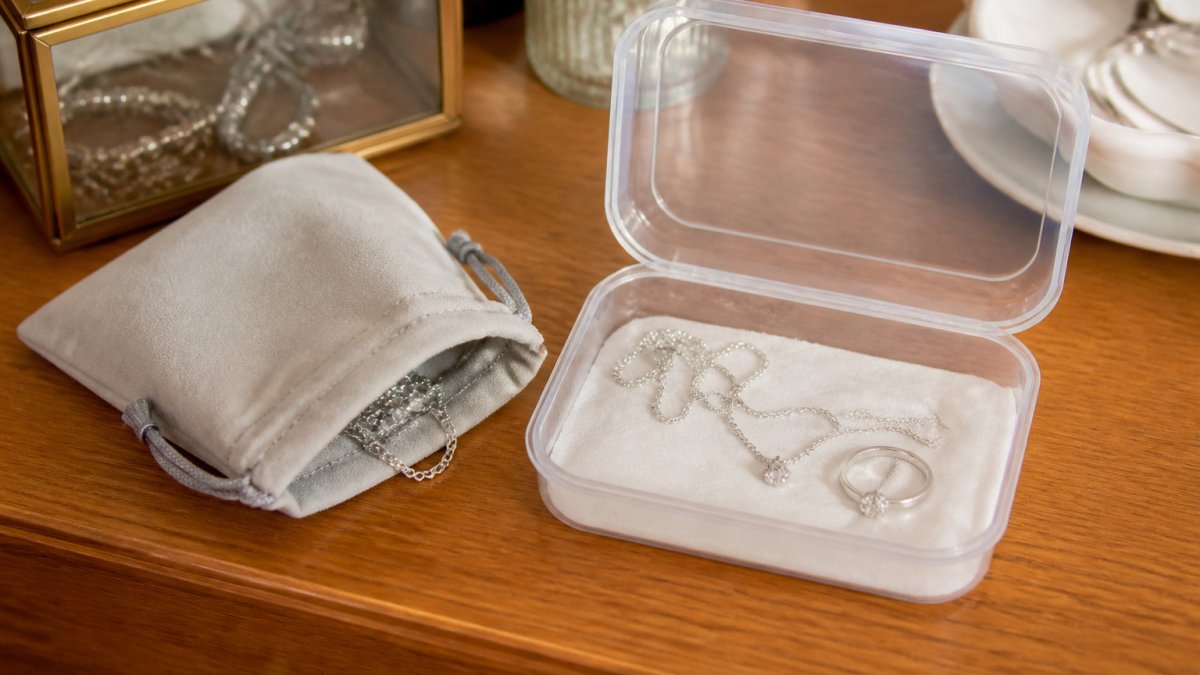
A bathroom is one of the worst places to keep jewelry, because steam and moisture build up there every day. A bedroom drawer or closet shelf stays drier.
Match the Container to the Metal
- Sterling silver: Airtight is best. Silver reacts with sulfur in the air, so a zip-top bag with the air pressed out, or a small box with a gasket lid, slows tarnish noticeably. Add an anti-tarnish strip to the container.
- Gold-plated and gold-filled: Keep pieces in individual soft pouches inside a closed box. The goal is to reduce rubbing, because friction wears the thin gold layer faster than air does. Avoid tossing plated pieces together in a jar.
- Brass and copper: These darken from both air and skin oils. Airtight storage helps, but wipe them dry before sealing, trapped moisture causes spotting.
Using Airtight Containers, Zip-Top Bags, and Anti-Tarnish Strips
Airtight storage limits how much oxygen and moisture reach the metal. Three options work well:
- Airtight containers: A small glass or plastic box with a snug lid works for rings and earrings. Look for a silicone gasket if you live in a humid climate.
- Zip-top bags: Press out as much air as you can before sealing. Use jewelry-specific bags with a soft lining when possible; standard kitchen bags can scratch polished surfaces.
- Anti-tarnish strips or silica gel packets: Place one inside the container or bag. Anti-tarnish strips trap sulfur compounds; silica gel absorbs moisture. Use both in a humid home.
Replace silica gel packets when they change color or feel damp, and recharge them if the packet allows it. Anti-tarnish strips usually last a few months before they need replacing. A common pattern is to swap strips every three to six months, or sooner if you notice tarnish returning quickly.
Pro Tip
If you live in a humid climate, keep a hygrometer near your jewelry box. Most home storage stays stable below about 50% relative humidity; above that, refresh silica packets more often.
Keeping Pieces Separated to Avoid Scratches
Metal rubbing against metal leaves tiny scratches that hold dirt and speed up tarnish. Give each piece its own space.
- Store necklaces hanging or laid flat, not tangled together. A hanging organizer with individual hooks prevents chain-on-chain abrasion.
- Put each ring in its own pouch or cell in a jewelry box.
- Keep stones and delicate pieces away from harder metals. A diamond or a hard metal clasp can scratch a pearl or a plated surface in the same drawer.
A soft pouch lined with fabric protects surfaces better than a bare drawer. For plated pieces, a tarnish-inhibiting pouch adds a second layer of protection without sealing the piece so tightly that moisture lingers.
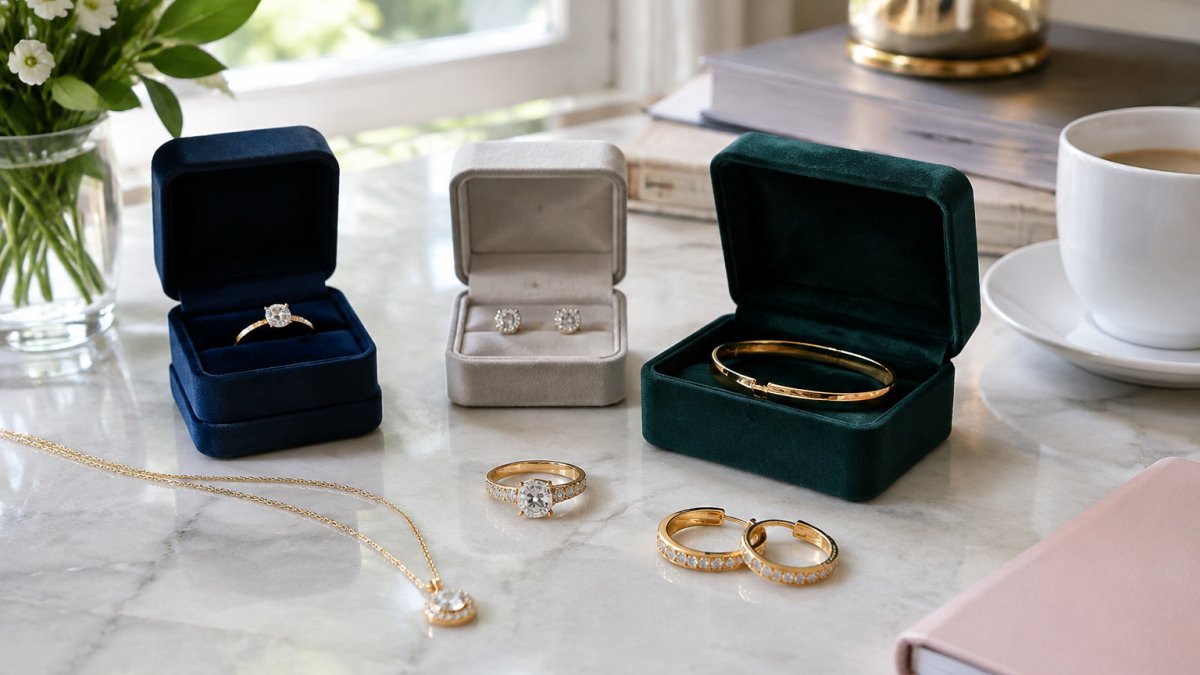
Storage choices differ by metal, so the table below matches each material to the container that suits it best.
| Material | Best storage | Key note |
|---|---|---|
| Sterling silver | Airtight bag or box | Add an anti-tarnish strip |
| Gold-plated / gold-filled | Individual soft pouches in a closed box | Reduce rubbing to protect the thin layer |
| Brass and copper | Airtight, after drying | Trapped moisture causes spotting |
| Stainless steel | Dry drawer or pouch | Sealing is optional |
| Pearls, opals, porous stones | Soft pouch in a dry room | Do not seal airtight; avoid direct heat |
How to Protect Jewelry from Water, Lotions, and Sprays
Water, lotions, perfumes, hairsprays, and aerosols all accelerate tarnish or leave residue that dulls the finish. A good habit is to put jewelry on last and take it off first.
- Remove jewelry before showering, swimming, or bathing. Chlorine and salt water both speed up tarnish.
- Put on lotion, perfume, and hair products before your jewelry. Let them dry first.
- Take off rings before washing dishes or cleaning with harsh products.
Watch out: Water left sitting in a setting or clasp can cause tarnish to form in places you cannot easily see. Dry these areas thoroughly.
Does Clear Nail Polish Prevent Jewelry from Tarnishing?
Clear nail polish is sometimes suggested as a DIY barrier, but it is not a reliable fix. Nail polish can yellow over time, chip, and trap moisture underneath. It can also be hard to remove without damaging the piece.
Two-Toned Polished Comb Ring - Adjustable →
For a lasting finish, many people prefer a jewelry protectant made for metals and used according to its label. Test any product on a small, hidden area first.
How to Clean Tarnished Jewelry Safely
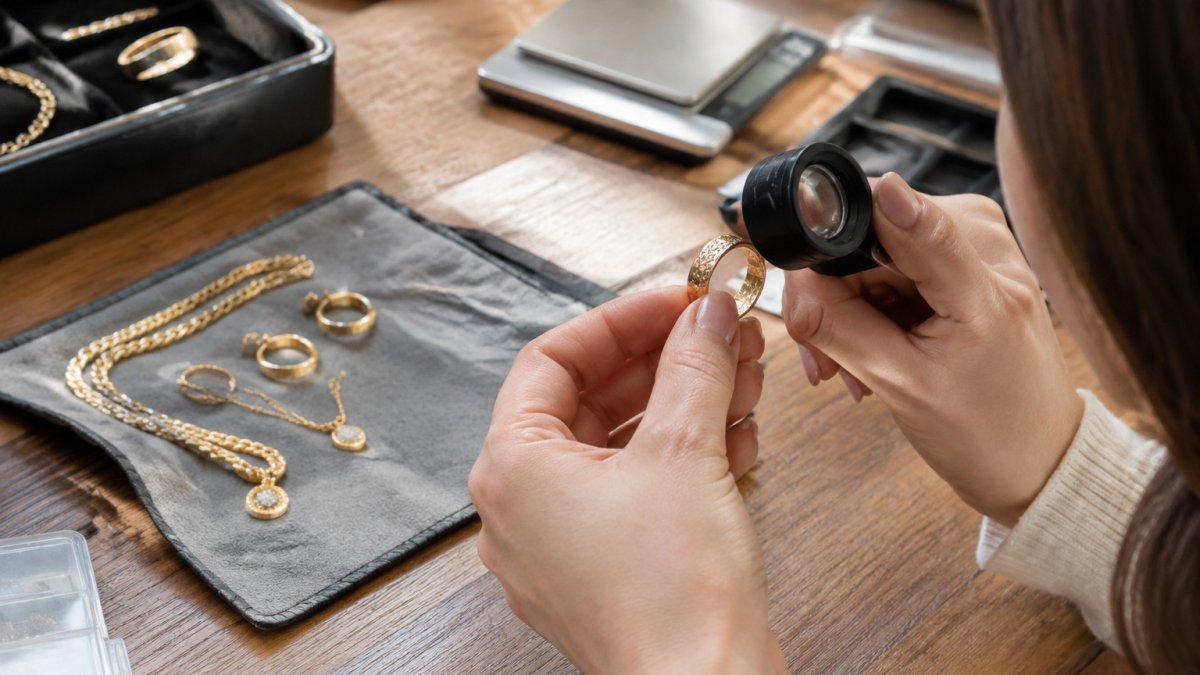
Before you clean, identify what you are looking at. Tarnish, plating wear, corrosion, and residue look similar but need different responses, and cleaning the wrong one can make the damage worse.
Tarnish vs. Other Discoloration
- Tarnish: A dark, brown, or yellowish film on the surface of silver, copper, or brass. It sits on top of the metal and usually comes off with a polishing cloth. Silver tarnish is often described as black or purple-black in crevices.
- Plating wear: The gold or rhodium layer has rubbed thin, revealing a duller or differently colored base metal underneath. You will see it first on high-contact areas, ring shanks, clasp edges, the back of a pendant. Polishing will not restore the color, and abrasive cleaners make it worse.
- Corrosion: Green or white crusty spots, often on brass, copper, or cheap base metals exposed to moisture. Corrosion pits the metal; it is not a surface film.
If you are not sure which one you have, clean a small hidden area first and check whether the color changes.
Step-by-Step Cleaning by Material
Clean tarnish gently. Harsh scrubbing can scratch the finish and wear off plating.
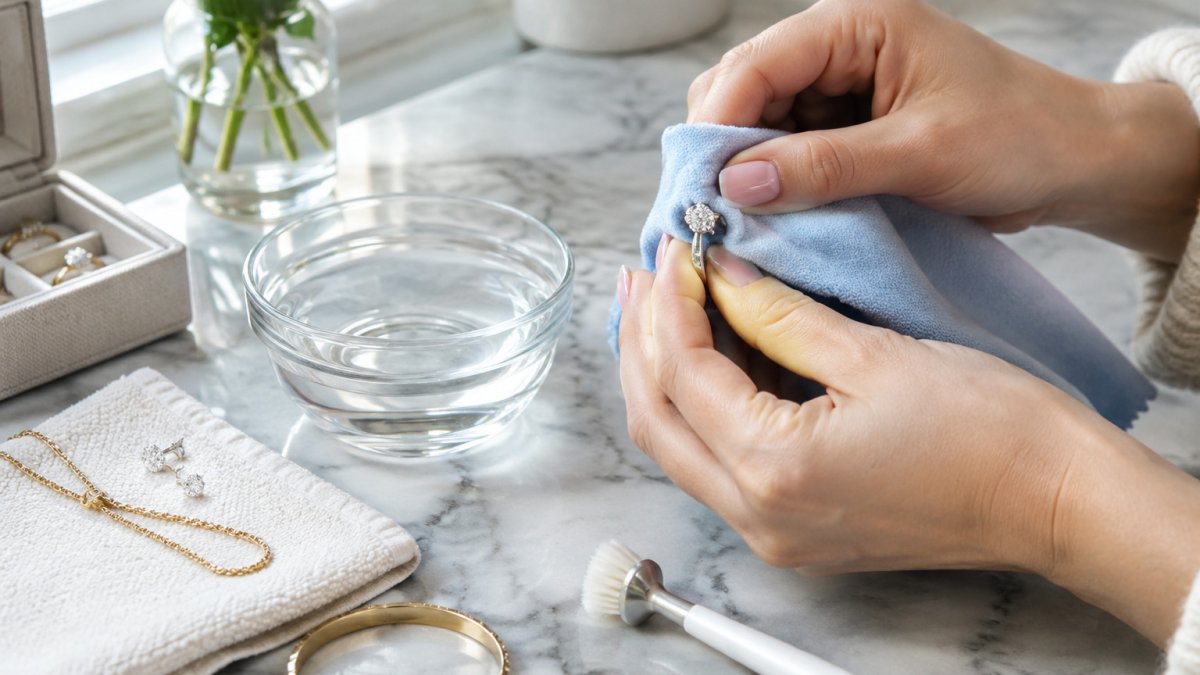
- Wipe the piece with a soft polishing cloth to remove light tarnish. For silver, a cloth treated with tarnish-removing compounds works well; keep it separate from gold and plated pieces.
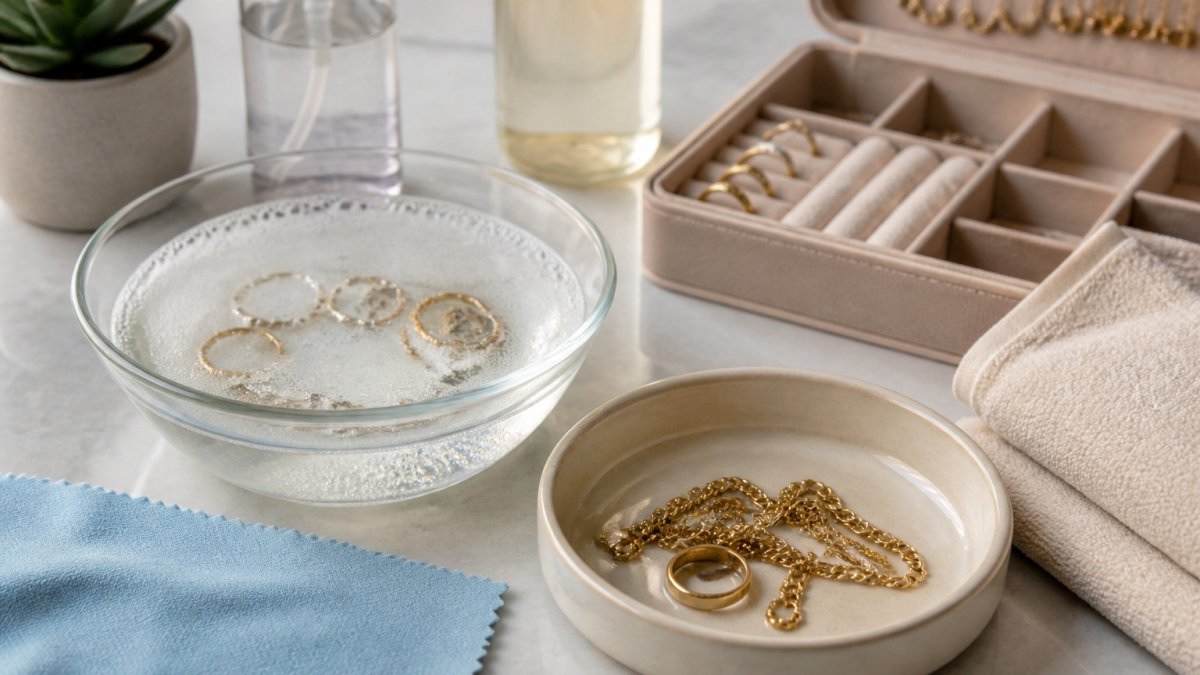
- For heavier tarnish on solid silver, use a mild soap and warm water, then dry it fully. A silver dip works on solid silver but should not be used on plated pieces, pearls, or stones with cracks.
- Use a jewelry polish made for your metal type when cloth alone is not enough. Gold polish on silver, or silver polish on gold plate, can dull the finish.
- Avoid abrasive pads, bleach, and household cleaners on plated or stone-set pieces. Toothpaste is a common home remedy, but it is mildly abrasive and can scratch plated surfaces and soft stones.
Pearls, opals, and porous stones need special care. Water and strong cleaners can damage them, so wipe them with a barely damp cloth and dry them right away. Never soak pearls or opals, and keep them away from silver dip and ultrasonic cleaners.
Watch Out
Do not use an ultrasonic cleaner on opals, pearls, emeralds, or any stone with fractures. The vibrations can crack or cloud them (Ultrasonic Cleaners for Gems: What You Need to Know). Check the stone type before using any machine cleaning method.
When Prevention Is No Longer Enough
Home cleaning handles surface tarnish, but some damage needs a professional:
- Plating has worn through to the base metal. A jeweler can replate the piece; polishing at home will only remove more of the remaining layer.
- Corrosion has pitted the metal. Green or white crust that does not wipe away often means the surface is damaged, not just tarnished.
- Stones are loose or the setting looks worn. Cleaning can dislodge a stone that is already loose; have the setting checked first.
A practical rule: if two rounds of gentle cleaning do not change the appearance, stop and have the piece looked at. Repeated polishing removes metal and plating, so more cleaning is not always better.
Building a Daily Jewelry Care Routine for Your Pieces
A simple routine keeps tarnish from building up. Most people need only a few minutes a day.
- Each time you take jewelry off: Wipe it with a soft, dry cloth.
- Each night: Place pieces in a dry, sealed container or pouch.
- Each week: Check silica packets and anti-tarnish strips, and replace them if needed.
Pieces made from stainless steel need less upkeep than silver or plated jewelry. For everyday wear that resists tarnish, our stainless steel options are a practical choice. Our Triple Loop, Stainless Ring is made from stainless steel, and our Stainless Steel Bracelet - Intensity offers the same low-maintenance finish for daily wear. If you prefer a polished, adjustable style, the Two-Toned Polished Comb Ring - Adjustable and the Bracelet - Intensity are also made to be worn often.


Good storage and gentle care matter more than any single product when you want to know how to prevent jewelry from tarnishing over the long run. Start with dry, separated storage, and add the other habits as they fit your routine.
Frequently Asked Questions
What can I put on my jewelry to keep it from tarnishing?
The most effective option is to keep pieces in an airtight container or zip-top bag with an anti-tarnish strip or silica gel packet. Store them dry, away from humidity, and keep them separated so metal does not rub against metal. A soft pouch or lined jewelry box also limits air exposure. Avoid applying lotions, perfumes, or aerosol sprays directly before wearing, since chemicals speed up oxidation. For sterling silver, a thin protectant spray can slow tarnish, but test any product on a small hidden area first and follow the manufacturer's instructions.
Does clear nail polish prevent jewelry from tarnishing?
Clear nail polish can create a barrier on some metals, but it is not a reliable long-term solution. It wears off with handling and contact with water, so the protection is short-lived and uneven. It also cannot be applied well to stones, clasps, or moving parts without risk of clumping or sticking. A better approach is to store pieces dry in airtight containers and use a dedicated jewelry protectant if you want a coating. Reapply or remove any coating carefully if it begins to peel or yellow.
How should I store jewelry to prevent tarnishing?
Store each piece in its own soft pouch or compartment inside a closed jewelry box. Add an anti-tarnish strip or a silica gel packet to absorb moisture, and keep the box in a cool, dry place away from bathrooms. Avoid leaving jewelry on a sunny windowsill or in a damp drawer. Clean and fully dry pieces before storing them, since residue from sweat or lotion accelerates tarnish. Storing pieces separately also prevents scratches on softer metals and gemstones.
How often should I clean jewelry to prevent tarnish?
Wipe pieces with a soft polishing cloth after each wear to remove oils, sweat, and moisture. A deeper clean is only needed when tarnish or residue builds up, which for most everyday pieces is every few weeks to a few months depending on wear. Over-cleaning can wear away plating on costume or plated jewelry, so use gentle methods first and avoid harsh abrasives. Remove jewelry before swimming, showering, exercising, or applying products to limit exposure.